
Understanding Real Estate Photography
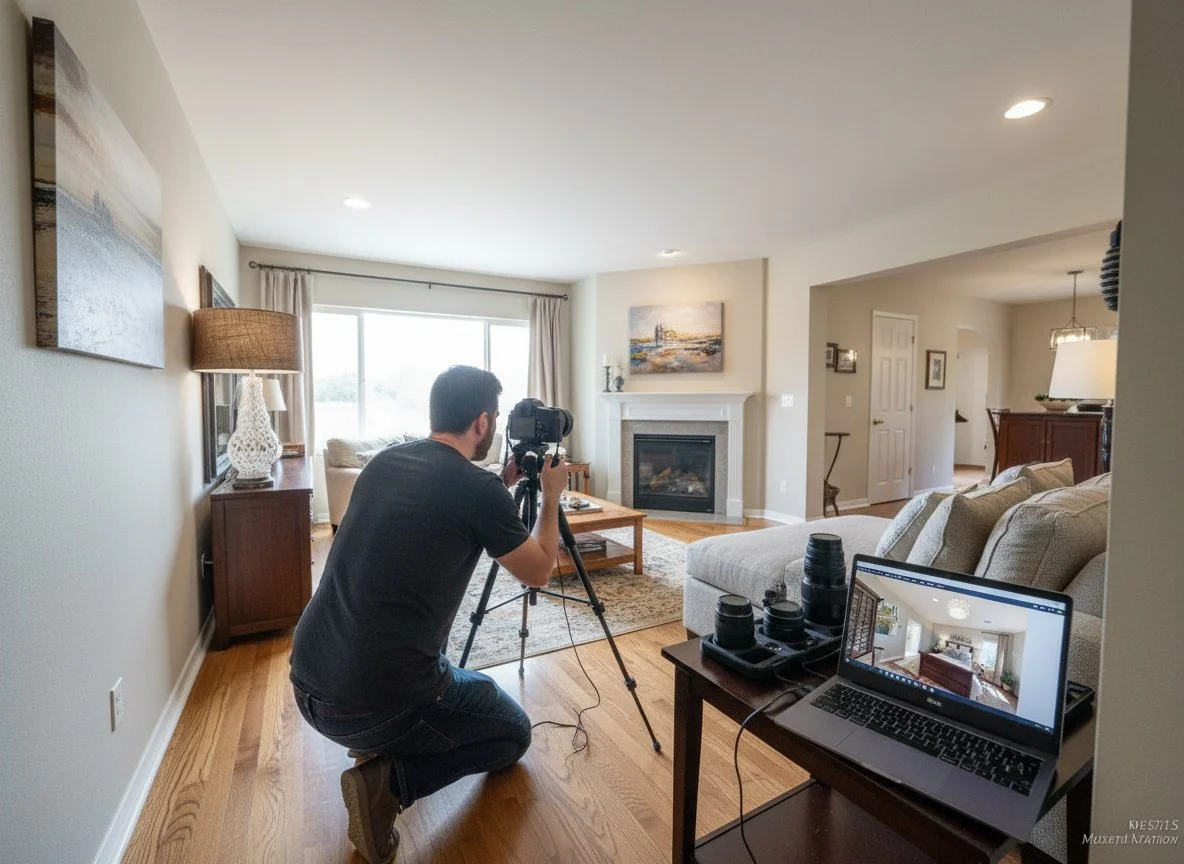
Real estate photography is one of the most important visual components of a property listing. Before buyers schedule a showing, they often evaluate homes through listing photos, which means those images need to communicate the property's appearance, layout, condition, and most important features clearly.
Effective real estate photography is not simply about making rooms look attractive. It involves preparing the property, controlling lighting, selecting appropriate camera equipment, composing each image carefully, and editing photographs so they remain polished without misrepresenting the home.
For sellers, agents, builders, and property managers, understanding these fundamentals can help create listings that give prospective buyers a clearer and more professional first look at the property.
Key Takeaways
Real estate photography should accurately present the property while highlighting its strongest features.
Lighting and composition are often more important than expensive camera equipment alone.
Wide-angle lenses can help show rooms clearly, but overly wide perspectives can distort their apparent size.
Cleaning, decluttering, and staging should happen before the photography session.
Vertical lines, camera height, and room-to-room consistency influence how professional a listing looks.
Editing should improve brightness, color, and consistency without materially altering the property.
Photography can be combined with floor plans, drone images, video, and virtual tours for a more complete listing presentation.
What Is Real Estate Photography?
Real estate photography is a specialized form of architectural and interior photography focused on marketing residential, commercial, rental, or development properties.
The objective is to document the property in a way that is visually appealing while still helping potential buyers or tenants understand what they would encounter in person.
A photographer may capture exterior elevations, living spaces, kitchens, bedrooms, bathrooms, outdoor areas, views, architectural details, and other features that influence a buyer's evaluation.
Unlike general lifestyle photography, real estate photography often needs to show both individual features and the overall structure of a room.
A beautiful photograph that leaves viewers unable to understand the space may not be as useful as an image that balances aesthetics with information.
Why Real Estate Photography Matters
Property searches increasingly begin with visual screening.
Buyers can review numerous listings in a short period, often deciding within seconds whether a property deserves further attention.
Photography therefore helps create the first impression.
Bright, organized, consistent images can make a listing easier to evaluate, while dark rooms, crooked vertical lines, clutter, or poorly composed photographs can distract from the property's actual strengths.
Professional images can also help agents communicate details before a showing.
A useful photo set may answer questions about room size, natural light, flooring, kitchen design, outdoor living areas, and how spaces connect.
The goal is not to guarantee a particular sale price or faster transaction.
Real estate photography is a marketing tool that helps present the property clearly and professionally so buyers can make more informed decisions about which homes they want to explore further.
Prepare the Property Before Taking Photos
Photography begins before the camera is set up.
Even excellent equipment cannot completely compensate for clutter, inconsistent staging, burned-out lights, or distracting personal items.
Start by cleaning major surfaces and removing unnecessary objects.
Kitchen counters should generally be simplified. Bathroom counters can be cleared of everyday products. Beds should be made, blinds adjusted, and visible clutter reduced.
Furniture placement may also need attention.
Removing one unnecessary chair or table can sometimes create a clearer view through the room.
The purpose is not to make the home look empty.
It is to help viewers focus on the property rather than the current owner's possessions.
Use Lighting to Make Rooms Easier to Understand
Lighting is one of the most important elements of real estate photography.
Natural light can make interiors feel open and inviting, but extremely bright windows can create exposure challenges when the room itself is much darker.
Photographers may balance several exposures or use supplemental lighting to retain detail in both the interior and exterior view.
Artificial lighting also affects color.
Different bulbs can produce warm, cool, or mixed color temperatures throughout a home.
Before photographing a property, check that fixtures are functioning and consider whether inconsistent bulbs create distracting color differences.
The objective is a natural-looking room with visible detail throughout important areas.
Windows should not necessarily appear completely white, and dark corners should not become so bright through editing that the image looks unrealistic.
Choose the Right Camera Position
Camera placement affects how spacious, balanced, and natural a room appears.
One common technique is positioning the camera approximately around mid-height rather than photographing every room from normal standing eye level.
The exact height depends on the room, furniture, countertops, and composition.
In kitchens, the camera may need to be high enough to show countertops clearly without revealing too much of the cabinet tops.
In bedrooms or living spaces, a slightly lower perspective can sometimes provide better visual balance.
Keeping the camera level is equally important.
If the camera tilts too far upward or downward, walls and doorframes may appear to lean.
Straight vertical lines help architectural photographs look more polished and provide a more realistic representation of the room.
Add Drone Photography When Location Matters
Ground photography documents the home effectively, but certain listings benefit from additional context.
Drone photography can show large lots, acreage, outdoor amenities, detached structures, commercial parking, nearby landscape, and the relationship between the building and its surroundings.
It is particularly useful when the location or property layout contributes significantly to the listing.
Aerial photography should complement traditional images rather than replace them.
Buyers still need clear interior and ground-level exterior photographs.
For more information about using aerial imagery, see The Impact of Drone Photography on Real Estate Marketing.
Consider Floor Plans and Virtual Tours
Photography answers many buyer questions, but it cannot always explain spatial relationships completely.
A floor plan can provide a simplified overview showing how rooms connect.
Virtual tours and 3D property imaging allow viewers to explore spaces more interactively.
These formats can be especially useful for larger homes, unusual floor plans, relocation buyers, investment properties, or listings where understanding circulation between rooms is important.
| Marketing Asset | Primary Strength |
|---|---|
| Professional photography | Fast visual presentation |
| Floor plan | Simple layout reference |
| Virtual tour | Interactive property exploration |
| Video | Guided storytelling |
| Drone photography | Exterior and location context |
A complete real estate marketing package may use several of these assets together, depending on the property.
Common Real Estate Photography Mistakes
Several photography problems can weaken otherwise strong listings.
One is photographing cluttered rooms without adequate preparation.
Another is using an excessively wide lens that makes the property appear unrealistically large.
Crooked vertical lines, inconsistent color, dark interiors, blown-out windows, and visible photographer reflections can also reduce image quality.
Poor listing sequencing is another overlooked issue.
Even good photographs can feel confusing if viewers jump randomly between floors and rooms.
Finally, avoid excessive editing.
Buyers should recognize the property when they arrive for a showing.
Professional presentation and accurate representation should support each other.
Frequently Asked Questions
Why is professional real estate photography important?
Professional photography can present a property more clearly and consistently, helping buyers understand its rooms, finishes, exterior, and important features before scheduling a showing.
It also gives listings a more polished visual presentation across online marketing channels.
What equipment is commonly used for real estate photography?
Real estate photographers commonly use interchangeable-lens cameras, wide-angle lenses, tripods, lighting equipment, and editing software.
The exact equipment matters less than understanding exposure, composition, camera positioning, and how to represent spaces accurately.
How should a home be prepared for real estate photos?
Clean and declutter the property, organize furniture, clear unnecessary items from counters, make beds, check lighting, remove personal or sensitive information, and prepare exterior areas.
The goal is to reduce distractions while keeping the home natural and welcoming.
Can professional photography make a home sell for more?
Photography alone cannot guarantee a higher selling price.
Pricing, condition, location, market demand, competition, and many other factors affect the final transaction. Professional photography supports marketing by helping the listing communicate the property's features effectively.
Present Every Property with Greater Clarity
Real estate photography combines technical photography skills with an understanding of property marketing.
Successful images depend on preparation, lighting, camera position, composition, appropriate lens selection, and careful editing. Each photograph should help prospective buyers understand something meaningful about the home.
Still photography can then be supported by floor plans, virtual tours, video, or aerial imagery when those formats provide additional information.
The objective is not to make the property appear different from reality. It is to show its real features in a clear, attractive, and professional way.
For sellers and real estate professionals looking to improve how properties are presented online, professional photography can create a stronger foundation for the entire listing campaign.
Contact Us to learn more about professional real estate photography and visual marketing services.