
The Future of Real Estate: Virtual Tours and 3D Photography
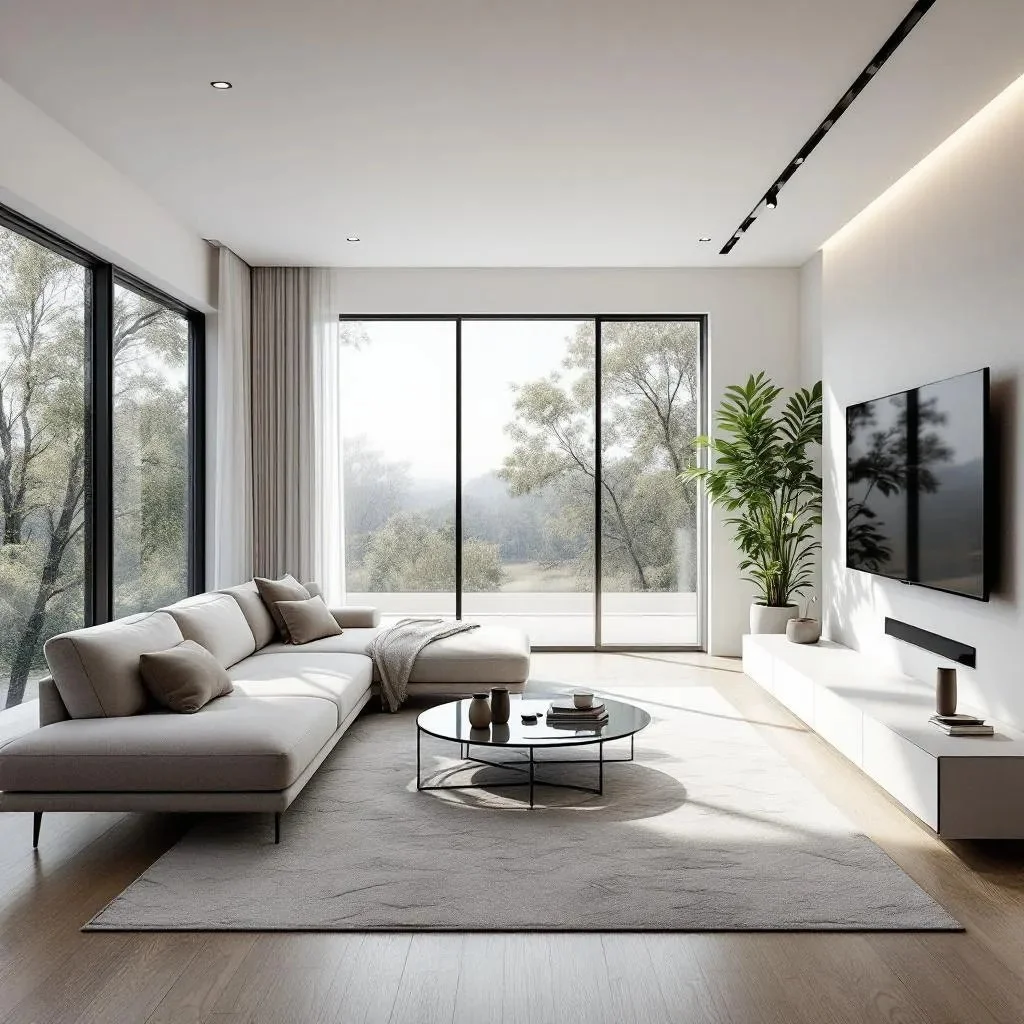
Virtual tours and 3D photography give buyers a way to explore a property beyond a standard photo gallery. Instead of viewing rooms individually, potential buyers can move through the home, study how spaces connect, and revisit important areas before deciding whether to schedule an in-person showing.
For real estate agents, sellers, builders, and property managers, these tools can add another layer of information to a listing. They do not replace professional still photography, but they can help buyers understand layout, scale, circulation, and room relationships that may be difficult to communicate through photographs alone.
Key Takeaways
Virtual tours allow buyers to explore properties remotely and at their own pace.
3D capture can help communicate room relationships and overall spatial flow.
Traditional real estate photography remains important for first impressions and listing presentation.
Virtual tours can be particularly useful for relocation buyers, occupied schedules, larger homes, and properties with complex layouts.
Property preparation matters because a 3D tour can reveal more of the home than carefully selected still photographs.
Accurate representation should remain a priority when creating any interactive property media.
Virtual tours, drone imagery, floor plans, video, and photography work best when each format answers a different buyer question.
What Are Virtual Tours and 3D Photography?
A virtual tour is an interactive digital representation of a property that allows viewers to navigate through rooms from a phone, tablet, or computer.
Instead of moving through a fixed sequence of photographs, users can choose where to look and which parts of the property to explore.
Many virtual tours are created by capturing a series of 360-degree images from multiple positions throughout the home.
Specialized software then connects those capture points into an interactive experience.
The term "3D photography" is often used to describe this process because the captured imagery can be used to create a more spatial representation of the property.
Depending on the platform and service, the finished experience may also include floor-plan views, measurement tools, navigation points, or a three-dimensional model of the space.
How Virtual Tours Differ from Traditional Real Estate Photography
Still photography and virtual tours perform different roles.
Professional listing photographs are curated.
The photographer chooses camera position, composition, focal length, lighting, and editing to present each room clearly and highlight important features.
A virtual tour gives the viewer greater control.
Buyers can turn around, examine another wall, move into an adjoining room, or return to an area they want to review.
| Media Type | Primary Strength |
|---|---|
| Professional photography | Strong first impressions and curated listing presentation |
| Virtual tour | Self-directed exploration |
| 3D model | Spatial understanding and room relationships |
| Floor plan | Simplified overview of property layout |
| Drone imagery | Exterior, lot, and neighborhood context |
| Video | Guided visual narrative |
These formats should therefore complement one another rather than compete.
A listing usually still needs strong professional photographs because those images are often what buyers see first when browsing search results.
Help Buyers Understand the Floor Plan
One of the strongest benefits of a virtual tour is its ability to explain how rooms relate to one another.
Traditional photographs may show that a kitchen, living room, and dining area are attractive individually, but buyers may still struggle to understand how those spaces connect.
An interactive tour can answer questions such as:
Is the kitchen open to the family room?
How far is the primary bedroom from the secondary bedrooms?
Does the hallway connect directly to the garage?
Where is the downstairs bathroom located?
How does the patio connect to the living space?
This spatial information can be particularly valuable in homes with unusual layouts, multiple levels, additions, or several connected living areas.
Give Buyers More Control Over Property Exploration
Real estate photography determines what buyers see.
Virtual tours allow buyers to decide what they want to investigate next.
A buyer interested in the kitchen can spend more time examining that area.
Someone concerned about bedroom separation can move through the hallway and study the relationship between rooms.
Another buyer may focus heavily on the basement, office, storage, or outdoor access.
This self-directed experience can make the listing more informative because different buyers often care about different features.
The same virtual tour can therefore answer several types of buyer questions without requiring a separate presentation for each viewer.
Support Relocation and Remote Buyers
Virtual property media can be especially useful when prospective buyers cannot easily visit a home.
Someone relocating to Denver from another state may begin evaluating properties long before arriving in Colorado.
Traditional photographs can establish interest, while a virtual tour can provide additional information about how the home actually functions.
Remote buyers can revisit the tour multiple times and review rooms with family members or other decision-makers.
A tour should not be treated as a substitute for every form of property due diligence, but it can provide a more detailed preliminary understanding than still images alone.
This makes virtual tours particularly relevant to listings targeting relocation buyers or geographically dispersed decision-makers.
Virtual Tours Can Help Buyers Revisit a Property
Even buyers who attend an in-person showing may forget details afterward.
They might remember the kitchen clearly but struggle to recall how large the secondary bedroom appeared or where a particular bathroom was located.
A virtual tour gives buyers an opportunity to revisit the property digitally.
They can compare the layout with another listing, review specific spaces, and discuss the home with family members without relying entirely on memory.
This can be useful when buyers are evaluating several properties within a short period.
Instead of only remembering broad impressions, they have another visual reference available during the decision-making process.
Where 3D Tours Are Especially Useful
Not every property needs the same marketing package.
Virtual tours can be particularly helpful when spatial understanding is an important part of the property's appeal.
| Property Type | Why a Virtual Tour May Help |
|---|---|
| Larger homes | Helps buyers understand multiple rooms and levels |
| Luxury properties | Provides additional detail and exploration |
| Relocation listings | Supports remote property evaluation |
| Multi-level homes | Clarifies stairs and room relationships |
| Complex layouts | Shows how spaces connect |
| New construction | Documents finished layouts and features |
| Rental properties | Helps prospective tenants explore remotely |
| Commercial spaces | Shows room configuration and circulation |
A small property with a very simple layout may require less interactive media.
The marketing package should reflect what is most useful for the listing rather than adding technology simply because it is available.
Virtual Tours Do Not Replace Professional Photography
Interactive technology may feel more advanced than a conventional photo gallery, but still photography continues to perform an important role.
Listing portals, social media, brochures, agent websites, email campaigns, and advertisements rely heavily on individual images.
Professional photographs also allow the photographer to choose the strongest compositions rather than leaving every visual decision to the viewer.
For that reason, virtual tours generally work best as an addition to professional real estate photography.
Agents interested in improving their overall image quality can review Optimizing Camera Equipment for Real Estate Photography.
A strong media package gives buyers several ways to understand the property.
Frequently Asked Questions
How do virtual tours benefit real estate marketing?
Virtual tours allow prospective buyers to explore a property interactively and understand how rooms connect.
They can be particularly helpful for remote buyers, larger properties, unusual layouts, and buyers comparing multiple homes.
What is the difference between a virtual tour and 3D photography?
3D or 360-degree photography refers to the imagery captured to represent a space, while a virtual tour is the interactive experience created from that imagery.
Depending on the platform, the tour may also include navigation, floor-plan views, or a three-dimensional model.
Do virtual tours replace professional real estate photos?
No.
Professional photographs remain important for listing thumbnails, galleries, social media, advertisements, brochures, and first impressions. Virtual tours complement those images by providing more interactive spatial information.
Which properties benefit most from virtual tours?
Virtual tours can be especially useful for large homes, luxury properties, multi-level homes, listings targeting relocation buyers, complex floor plans, rental properties, and properties where room relationships are difficult to communicate through still photographs alone.
Give Buyers More Ways to Understand the Property
The future of real estate marketing is not about replacing traditional photography with one new technology.
It is about using different forms of visual media for different purposes.
Professional photographs create a strong first impression. Virtual tours allow self-directed exploration. 3D capture can clarify spatial relationships. Floor plans simplify layout, while drone imagery provides exterior and neighborhood context.
When these tools are selected according to the needs of the property, they can create a more informative listing experience and help prospective buyers understand what they are considering before an in-person visit.
For real estate agents and property sellers in Denver, virtual tours and 3D photography can be valuable additions to a professional listing-media strategy when accurate presentation, careful property preparation, and strong traditional photography remain the foundation.
Get Started with Denver Real Estate Photography to discuss virtual tours, 3D photography, and other visual media for your next property listing.